
Movie Review: The World Before Her
- Ananya Mohindra
- May 2, 2022
- 5 min read

"I'm tough, ambitious, and I know exactly what I want. If that makes me a b*tch, okay."
~Madonna
Background
The World Before Her is a 2012 Canadian documentary film released on June 6, 2014, written and directed by Nisha Pahuja. The film explores the complex and conflicting environment for young girls in India by exhibiting two young women participating in two very different types of training camps - Ruhi Singh and Ankita Shorey who aspire to become Miss India, and Prachi Trivedi, a Hindu nationalist with the Durga Vahini. A critic for Firstpost called it "one of the most important, skillfully made and powerfully provocative films to come in a long time.”
Two lives depicted in the movie
The two worlds which are shown in the documentary, in both the worlds' women have their kinds of struggles and problems. In the urban world where women seem to be very happy and independent, they struggle for various things. In the 30-day training sessions, women did various things which they were not comfortable doing. One such example includes that the main focus of the judges and trainers was on the bodies of the models due to which they were often told to walk and stand with their bust and butt out as it highlighted their body parts and made them more desirable. Another instance was when there was a botox session where a cosmologist divided a woman's face into three parts and defined what it should be like. She even convinced girls who were at first unwilling to go for fillers.
In the movie, there is so much focus on the face and body that the real essence of beauty is forgotten. There is a presumed standard of beauty that everyone is trying to achieve. Another instance is when the girls were made to do a ramp walk where they all were wearing shorts and their upper body was covered with a cloak. This ramp walk aimed to decide which girl has the hottest legs. This was the most upsetting part of the training because all the girls were judged based on their legs. The question I would like to raise here is where is it defined what a girl's legs should be like, who is setting these standards? On what basis were they deciding who has the hottest legs? In my opinion, everyone is beautiful in their own way and there should not be any standards to beauty. Then there was a photoshoot where all the contestants had to wear a bikini. That time one of the contestants Ankita says, "It sometimes really hits you, are you so passionate about success that too at the cost of your dignity and values. Is it really worth it?" which in essence basically shows that girls were doing things they did not want to. I feel the new 'modern' world girls have gone so far trying to compete in the world that they have forgotten what they want.
Another issue I'd want to draw your attention to is female feticide. I'd like to start talking about this issue by asking you all a question: who gave you birth? It was undoubtedly a woman. Imagine if someone had questioned your or your mother's birth. Would you be present in this world today? One such story is narrated in the documentary where when a daughter is born, the father urges her wife to either donate her to an orphanage or simply murder her. When did the world become so cruel? In response, the woman told her husband, "You're leaving me for your daughter, this girl will one day make me proud." Now she is a proud mother of Pooja Chopra (Femina Miss World 2009).
"Durga vahini camp"
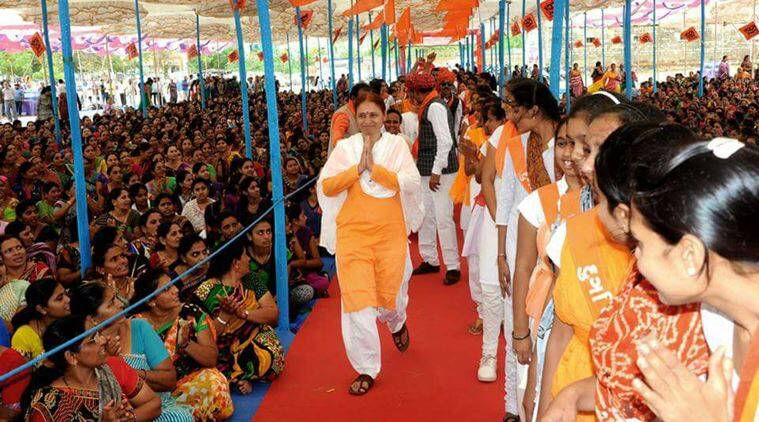
Women in rural areas are often not allowed to make decisions and are dominated by men. In the documentary, Prachi, a girl who works as an instructor at the Durga Vahini camp, is frequently urged by her father that she must marry and have children, regardless of whether she wants to or not, because he believes that marrying and having children completes a woman. Prachi is a determined young lady who makes her own decisions but even she believes that because her father is the reason for her being, she has to abide by his rules and marry irrespective of what she wants.
Prachi began attending similar camps at the age of three, and they have influenced her worldview. She believes that Hinduism is the world's largest and most powerful religion and that Muslims and Christians are demons. At the camp, Christians are compared to Putana, a demon from Krishna's early stories. The instructors at the camp are attempting to instill hatred towards Muslims and Christians in the camp, and they are succeeding, as evidenced by some of them declaring, "We are not afraid of anyone; anyone who questions our religion will be killed." The instructors teach girls how to use a gun and convince them that if they use it to murder anyone who opposes their beliefs, they will be considered saints. Young girls are being taught that murdering for one's religion is a form of self-defense rather than violence. Contrary to this, I believe as portrayed in the film PK, it is depicted accurately that there is no evidence of religious differentiation in the human body. If God had created such distinction, he would have used a stamp or mark to signify it. People make this distinction based on their clothing and personalities; otherwise, we are all humans. It's not our religion that separates us; it's the deeds that matter. In my opinion, such camps should not be permitted to function, and the government should intervene in their operations. These young women are the future of our country, and the erroneous ideologies instilled in them by camps breed extremists.
Another example I'd want to bring up is from one from Prachi’s childhood, when she was about 12 years old, she lied about the homework she got from tuition, which led to her father heating an iron rod and burning her daughter's ankle with it. He justified his actions by stating that they were necessary to educate her about what she should and should not do. This is a lesson she will remember for the rest of her life, and she will never lie again. Prachi responded to this by saying that her father has every right to beat her because he gave her life and allowed her to live even though she is a girl. It was very sad to see that men expect women to feel they’re privileged because someone didn’t just kill them.
In Conclusion
The film depicts various elements that influence Prachi, Ruhi, and Anikita's lives, and it discusses how people navigate their lives in today's society. The discourse tying women's bodies to national identity, purity, and religion is a problem that affects not only rural areas but India wholly. It is appropriately pointed out by Sheryl Sebastian in her review of the film that The film is particularly relevant at a time when the country is witnessing the birth of both of these opposing forces almost simultaneously: the fight to preserve tradition and the push to embrace modernity. All three women are locked in structures built by men that profess to "empower" them but are really just an excuse to mold them in patriarchal ways. Pahuja's non-intrusive and non-judgmental approach to filmmaking acts as a subliminal reminder not to be too quick to trust or rely on labels, as they are frequently deceptive. In totality, for emancipation of women they must be conferred with real freedom of choice and expression and not just an illusion of it.

Comments