
Violation of Right to Fair Trial during the CAA- NRC Protests
- Mehar Bedi
- Jan 5, 2022
- 4 min read
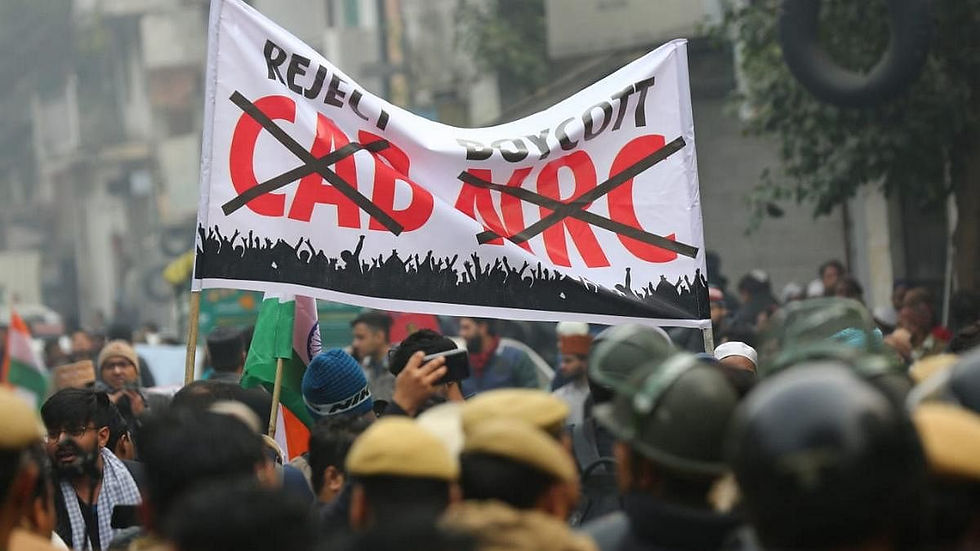
The beginning of the protests against the enactment of the Citizenship Amendment Act were met with immense violence and violation of rights by the Government. Be it the protests at Cotton University, Assam, the Jamia Millia Islamia protest, the gatherings at Shaheen Bagh, one of the aspects that were common to all was the unlawful detention of the protestors. They were denied their right to fair trial and were imprisoned for their activities. This blog aims to discuss this violation of the right to a fair trial in detail, while also providing case studies since the beginning of the protests in 2020.
What is CAA?
In December 2019, the Citizenship Amendment Bill (CAB) was introduced in the parliament, according to which Hindus, Sikhs, Christians, Buddhists, Jains, and Parsis coming to India from Pakistan, Bangladesh and Afghanistan would not be considered as illegal migrants and would be given Indian citizenship. There are a few discrepancies in the bill. Firstly, it made religion a condition for getting citizenship in the country. Secondly, the deliberate omission of Muslims from the list of persecuted minorities can be construed to be a violation of the basic fundamental rights granted by the Constitution of India. Despite its fallacies, the bill was passed by both houses, and it became the law after the President’s assent. This led to the enactment of the Citizenship Amendment Act (CAA).
Infringement of Right to fair trial
The enactment of the Act led to extreme agitation among the people which in turn led to protests throughout the country. During the protests, there occurred a serious violation of rights guaranteed to the protestors who were accused of inciting violence and disrupting peace through the means of the protests that took place in various cities around the country. Protestors were arrested, tear gas was used, and gatherings of protesters were fired upon. The Code of Criminal Procedure, 1973 guarantees to the citizens the right to a fair trial in which any bias or prejudice for or against the accused is eliminated, and a pleader is appointed by the Government in a case where the accused is not represented by a pleader. Article 21 of the Constitution of India grants protection of life and personal liberty to every citizen according to which, “no person shall be deprived of his life or personal liberty except according to procedure established by law.” Both these provisions were violated in the case of the activists that were arrested during the CAA-NRC protests.
The categorical exclusion of the Muslims from the list of persecuted minorities, justifies the involvement of Muslim in majority in the anti- CAA- NRC protests. Many of these protestors were imprisoned for questioning the government, without the prescribed lawful procedure. Some of them were released on bail, while many others continue to be detained unlawfully for their activities.

Case studies of protestors and the violation of right to fair trial:
One of the most widely talked about incidents of such violation occurred in Jamia Millia Islamia, where the students had planned a march against the law laid by the government. Lathi- charge and firing of tear gas on the students at the university took place in this march. Moreover, the police also entered the campus and assaulted the students and damaged the property of the university. FIRs were lodged against the students at the university, and many of them remain in jail till date.

The case of Devangana Kalita, Natasha Narwal, and Asif Iqbal Tanha, the students that were arrested under the Unlawful Activities (Prevention) Act (UAPA) for the Delhi protests against CAA, clearly highlights the fallacies of the criminal justice system of our country. Devangana Kalita and Natasha Narwal were re-arrested for different charges twice- once while they were in the courtroom, and the other time when they were already in jail. This showed an entirely new color of the police and the prosecution and their desperation to see the protestors behind bars. Asif Iqbal, who had organized a peaceful protest against the CAA, was charged by the Delhi police for rioting and being armed with a deadly weapon. He was also accused of attempted murder. Moreover, the copy of the charge sheet provided to the accused persons (who were in judicial custody at the time) was given in the form of a pen-drive, access to which was difficult due to the lack of resources for the accused persons.
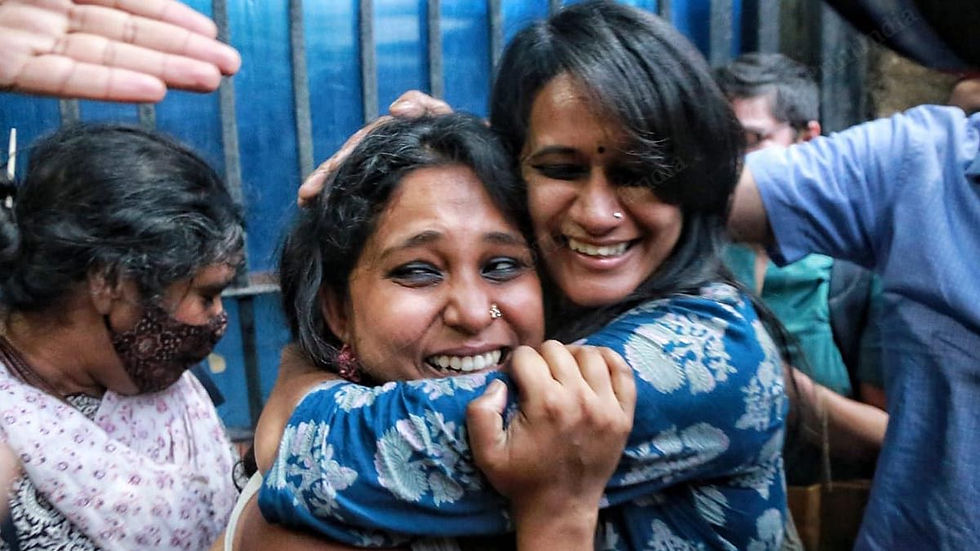
The bail application was heard by the High Court in June 2021, and the trial judge was directed to comply with the judgment that was passed. Another fallacy can be highlighted here. After the judgment was passed by the High Court, the police and the prosecution allegedly delayed the entire process (saying that the address of the three accused persons needed to be verified). The police have not complied with the prescribed procedures time and time again. In the most recent development, the Delhi Police has filed a Special Leave Petition (SLP) before the Supreme Court challenging the Delhi High Court bail order.
This approach of the government is not restricted to Delhi alone. In Madhya Pradesh, 24-year-old Anwar Khan updated his WhatsApp status to “you fired one bullet in Delhi, we changed Madhya Pradesh and Shajapur to Shahin Bagh (NO CAA NRC)”. A case was filed against Khan under Section 188 and 505 (2) of the Indian Penal Code on the pretext that his WhatsApp status could ‘disrupt religious harmony and public peace’. The accused remained in judicial custody for about five months and was granted bail by the Madhya Pradesh High Court on certain conditions, one of which was that Khan had to meet with a social worker for counseling (for opposing CAA-NRC) every month for three months. In this case, the absurdity of both the charges and the conditions for bail levied on the accused, speak volumes of the criminal justice system of the country and where it is headed.
Conclusion
While the ongoing Covid-19 pandemic makes it particularly impossible for people to come out on the roads to express their dissent against the Citizenship Amendment Act, it must not be forgotten that many of the activists involved in these protests remain behind bars while many others are fighting to have them released. While it is clear that the arbitrariness of the actions of the government against anybody who raises their voice against them will continue to exist in times to come, it is also evident that the fight of the people of the country against the draconian laws of the government in place will not be concluding anytime soon.


Comments