
India Building Women Warriors
- Mahitha Reddy
- Oct 22, 2021
- 4 min read
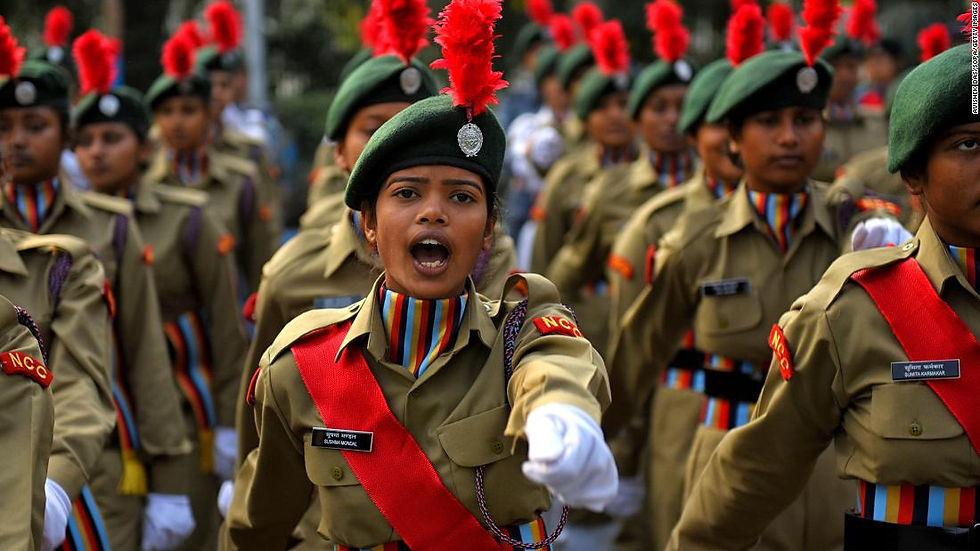
In September 2021, the Supreme Court of India, in the case of Kush Kalra v. Union of India (2001), issued an interim direction permitting women to take part in the National Defence Academy (NDA) examination scheduled this year without any delay, refuting the Union Government’s announcement that this year’s examination would be exempted for women. The NDA is an Indian national exam conducted by the Union Public Service Commission (UPSC) for admission into the Army, Navy, and Air Force wings of the NDA. The NDA only admitted men until the Supreme Court opened the doors of the NDA for female candidates to appear for the examination and gain admittance. Indian women have come a long way in their arduous journey to serve the nation by being part of the armed forces at par with their male counterparts. This article aims to discuss this journey.
History of Women in the Battlefield
Women warriors are neither a new concept in India nor for the Indian culture. Women have always been part of the battlefield protecting their people and land from rivals, including those such as Rani Laxmibai, Uda Devi, Begum Hazrat Mahal, Rani Velu Nachiyar, Keladi Chennamma, Onake Obavva and many more. During the two world wars in the 20th century, the British admitted Indian women into the armed forces to form the Women’s Auxiliary Corp-India in 1942. With increasing demand, the Women’s Royal Indian Naval Service was established in 1944 allowing women to serve at the shore. Apart from taking part in the world wars, an army of women was also formed to fight against the British. Subhas Chandra Bose, in one of his speeches, said, “I want … a unit of brave Indian women to form a death-defying Regiment who will wield the sword which Rani of Jhansi wielded in India’s First War of Independence in 1857”. Many women joined The revived Indian National Army to revolt against the British, followed by an all-women “Rani of Jhansi” regiment consisting of women warriors alone. However, all these organisations formed to recruit women warriors were subsequently disbanded.

Journey of Indian Women into the Armed Forces Post-Independence
When India attained independence from the British, the Constitution of India came into effect. Article 33 empowered the Parliament to enact laws restricting the fundamental rights under Part III in their application to the members of armed forces to ensure proper discharge of their duties and maintain discipline. Deriving power under Article 33 of the Constitution, Section 9(2) of the Navy Act, 1957 was enacted, prohibiting the appointment or enrolment of women in the Navy. However, this section allows the Parliament, by notification, to make exceptions to this prohibition. Based on this exception, the Government of India issued a notification on 9th October 1991 making women eligible for the appointment as officers in three cadres/branches of the Navy, i.e., logistics, law and education. This notification can be said to be the commencement of the journey of Indian women into the armed forces. Following this notification, the Government released a list of terms and conditions applicable to female officers, contemplating Permanent Commission (PC) for them, making them eligible only for Short Service Commission (SSC) officer positions that last five years. Once again on 6th November 1998, the Government made women eligible to be appointed in all four branches of the Navy, i.e., Executive Electrical, Engineering and Education, exercising its right under the Section 9(2) NA, 1957 exception. The Government then released regulations to govern the grant of PC for female Naval officers subject to certain conditions in 1999. However, this was never executed and, in 2006, women continued to be commissioned for the SSC only, although this time it was extended up to 10 years, extendable up to 14 years. Despite the Government’s directions to make women eligible for PC, they have never been allotted PC or any high commanding positions in the 20th Century, while their male counterparts were typically given PC positions after 10 years of tenure.
Permanent Commission for Women Officers
Various PILs were filed seeking PC for female SSC officers in 2003 and 2006. An order was passed by the Ministry of Defence granting PC prospectively to officers in certain streams only, which was again challenged due to its restrictive nature. Then came the 2010 Delhi High Court judgement in The Secretary, Ministry of Defence v. Babita Puniya & Ors. (2020) which ruled that women officers of the air force and army on SSC who had sought PC would be entitled to PC at par with their male counterparts. However, India was not ready to implement this judgement as yet; the Union Government challenged the judgement in the Supreme Court. In February 2019, the Union Government, while the proceedings were continuing in the Supreme Court, passed an order granting PC to SSC women officers in eight streams of the Army, but that order did not offer any command appointments and was to serve only staff posts. Followed by this, the Supreme Court in the Babita Puniya case on 17th February 2020, dismissing the Union Government’s submissions of women being physiologically weaker than men as an outdated gender stereotype and upholding the High Court judgement, stated that the women belonging to the Indian armed forces will be granted PC and be eligible for command posts to serve in the army irrespective of their service years. This is a historical, landmark judgement for the litany of female officers seeking critical roles in the Indian defence system.
The Road Ahead for Women in the Armed Forces
When looking back at history, India encountered many brave women warriors on and off the battlefield, so there is no question of women being any weaker or ineligible for the Indian defence system. The recent Supreme Court judgement also highlights the same and has attempted to give opportunities to women to progress in the armed forces. However, it is not over yet; women have a long way to go in their struggle to move forward in the armed forces. The offices, training centres, institutions, etc. of the armed forces (including the NDA) are not completely ready to accommodate women because they have never been designed in a way to do so. There is still a long way to go in the minds of the people and with regards to current infrastructure to be able to accept and adapt to the fact that women will be part of the armed forces and can bring pride to the country in safeguarding India.


Comments