

Save Lifesavers from Ferocity
- Aditi Singh & Aditya Kumar
- Jun 21, 2021
- 6 min read

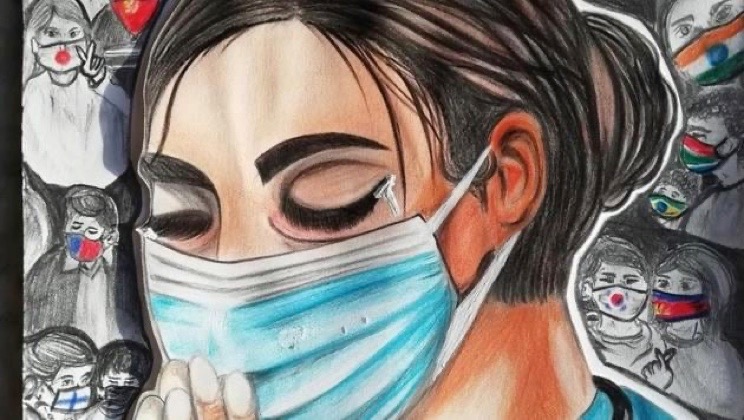
The world is currently going through a very challenging time. The COVID-19 pandemic has taken the world by storm, affecting almost every sphere of human life. Since the inception of the pandemic, the healthcare system has worked tirelessly to alleviate the current situation; however, the pandemic has potentially permanently altered the public’s perspective of the healthcare sector. While The healthcare sector is striving to find new ways to negate the impact of the virus, the recent attacks on the sector’s workers are really distressing. The current situation is bleak. People are extremely distressed and disappointed in the healthcare system, which is not appropriately equipped to deal with the turmoil. Eventually, such anger is projected onto the medical staff. Incidents are emerging where doctors, nurses, and other hospital workers are assaulted and attacked by the families of deceased patients. In some cases, the doctors had to be hospitalised due to such violent incidents.
Healthcare workers are already burdened with excessive work, and such incidents further exacerbate the situation. This concerning trend stresses the need for better safeguards to protect healthcare workers from acts of violence. Protecting frontline healthcare personnel's health and lives is more important than ever during the COVID-19 pandemic and thus it must be foremost our priority.
The Plight of Healthcare workers

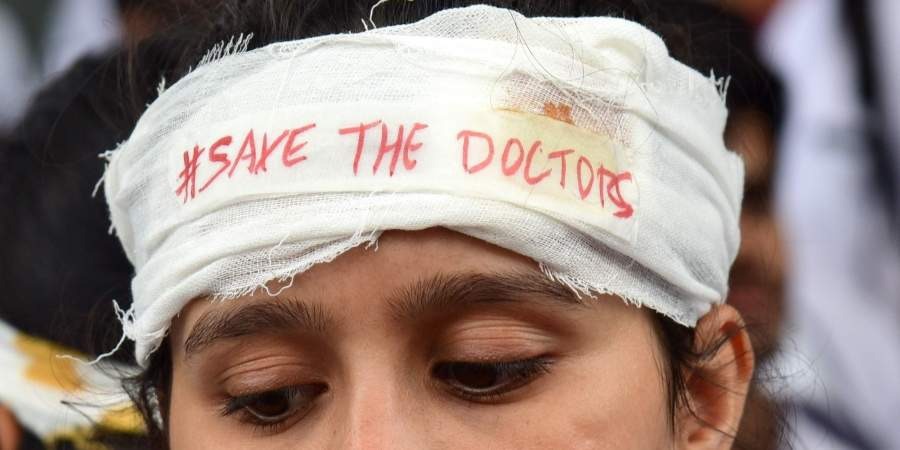
Since the very beginning of the pandemic, incidents of assault against healthcare workers have become increasingly frequent. According to statistics from the Safeguarding Health in Conflict Coalition (SHCC), India experienced the largest number of coronavirus-related attacks, with 128 out of 412 instances; carried out primarily by demonstrators, patients and their family, and police. These acts of aggression linked to the COVID-19 pandemic can be attributed to the people's grievances and frustration against the healthcare system's incapacity. The situation became even worse when the second wave struck the increasingly complacent nation, catching it completely off-guard.
Generally, such incidents of aggression can be attributed to the rising societal stigma and discriminatory practices directed at anybody suspected of having come into contact with the virus. Due to the erroneous idea that they have become sectors of contagion in a community, health resources, patients, health care workers, and their families are at an exceptionally high risk of being attacked. Further, it is seen that fake news aggravates the situation as some people spread false information pertaining to unreliability of the medical treatments or official information about the virus.
Some of the recent incidents of violence against medical workers are as follows:
Recently, a doctor working in a coronavirus facility almost 140 km from Guwahati was brutally beaten and assaulted with metal trash cans and stones by relatives of a Covid patient who died purportedly due to oxygen deprivation. The doctor, who is currently hospitalised but stable, was also beaten by locals. After a video of the callous brutality against the doctor went viral on social media, 24 individuals were detained in overnight searches, including the primary culprit.
The Guwahati branch of the Assam Medical Services Association (AMSA) had demanded that the perpetrators be punished severely. They have also declared a boycott of all government medical institutions' Outpatient Department (OPD) services.
Similarly, after the death of a COVID-19 patient in Delhi, relatives of the patient allegedly attacked seven to eight hospital personnel, including physicians, at Apollo Hospital in Sarita Vihar, causing severe injuries.
In Kerala, since the second wave of COVID-19 began in March 2021, seven incidents of assault and abuse against healthcare workers (HCWs) have been reported. Two incidents were recorded in Thrissur and Alappuzha districts, while one each was recorded in Kozhikode, Palakkad, and Thiruvananthapuram. Although complaints have been filed, the culprits are still on the loose.
The victims – government physicians of all ranks, both women and men — were accused of giving inadequate care, which led to complications or death. Those who chastised the accused for not following Covid protocols were attacked as well. In Nasik, Maharashtra, two doctors and medical staff of a private hospital were assaulted in separate events when two Covid-19 patients, one of whom was a corporator’s brother, died during treatment on April 26th, 2021. All the people involved in the attacks have been charged, and one person has been detained. These incidents infuriated private medical practitioners, who have been at the forefront of the city's fight against the pandemic's second wave.
Apart from these disheartening incidents, the pandemic has ameliorated the mental health of healthcare workers. Those in India’s healthcare sector are under tremendous psychological strain as they deal with the magnitude of the pandemic without adequate infrastructure. Stress, insomnia, and burnout are common complaints among them. The constant strain of patients, rising mortality rates, long working hours, helplessness due to a lack of resources, the persistent risk and tension of getting infected by COVID-19, and concerns regarding the safety of their own families are the factors responsible for the mental health crisis in the healthcare industry.
Remedies


In light of increased incident reports related to violence against healthcare workers nationwide, an amendment in the Epidemic Diseases Act 1897 was made through an ordinance. Later on, the ordinance was replaced by a parliamentary bill. The amendment sought to protect all healthcare workers by stipulating punitive actions against the people inflicting violence. The bill reflects the zero-tolerance attitude of the Government against any form of violence or assault against any healthcare worker.
As per the amendment, a healthcare worker is a person who is at a higher risk of getting in contact with the epidemic disease while doing activities associated with the pandemic ,such as dealing with the patients or conducting tests . They include:
public and clinical healthcare practitioners such as physicians and nurses;
anybody authorised by the Act to take steps to prevent the illness from spreading and;
anybody else designated as such by the appropriate state government.
Under the purview of the amendment, an ‘act of violence’ is any act committed against any healthcare worker such as:
harassments which impact working conditions;
Any act which inflicts harm, injury, or damage to the healthcare worker;
Any act which attempts to obstruct the pathway of performance of the duty and;
Any act that damages the property of the healthcare workers. Property includes the clinical establishment, documents, medical vehicles or any other property crucial to a given healthcare department.
The amendment stipulates for various penal actions to be taken against people involved in violent activities directed towards healthcare workers. It specifies that anyone who engages in an act of violence against a healthcare service worker, or causes damage to property during the pandemic will be punished under the purview of this amendment. Any person committing these aforementioned acts will face imprisonment between 3 months to 5 years, depending upon the severity of the act. Additionally, they will be liable to pay a fine between fifty thousand to two lakh rupees.
If an act of violence against a healthcare worker causes grave injury, the convict will face a sentence of six months to seven years in jail and a fine of one lakh to five lakh rupees. However, all the acts of violence highlighted in the amendment are cognisable and non-bailable acts.
Further, the amendments delineate compensation for all healthcare workers subjected to violence in pursuance of their duty. Persons convicted of violations under the new laws shall be required to compensate any healthcare service professionals who have been injured due to their actions. The Court will decide on the amount of compensation. In the event of property damage or loss, the victim shall be compensated double the amount of the property's fair market value, as decided by the Court.
Conclusion

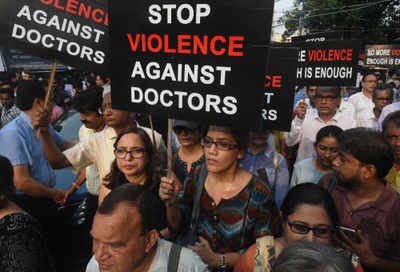
Undoubtedly, the COVID-19pandemic continues to have a scathing impact on the healthcare sector, both physically and mentally. With the onset of the second wave, the situation has become much darker, and chips the high. Additionally, the lack of any support from the state makes the entire situation more challenging. Amidst this chaos, the mental health of the healthcare workers is also deteriorating as the situation intensifies.
In such hard times, the attacks on healthcare workers are disturbing as they are the ones at the frontline, bearing the thrust of this macabre dance of COVID-19. According to reports by the IMA, one-quarter of healthcare worker fatalities occurred in Delhi alone. While countries like those in North American and Europe are recovering from the effects of the virus, India is moving in the opposite direction. If such incidents of violence are not stopped, medical staff will eventually be discouraged, and national recovery will take much more time. Although the Government has enacted laws to curb any form of violence directed at healthcare workers; the situation hasn’t significantly changed due to the poor implementation of the same.
As of right now, the road to normalcy is quite long, and the least we can do is support our nation’s healthcare workers and provide them with adequate protection, to repair the venerable effigy of the health care sector.


Comments