
The Ongoing Manifestation of Russo-Ukrainian War.
- Aneesh Singh
- Apr 6, 2022
- 5 min read

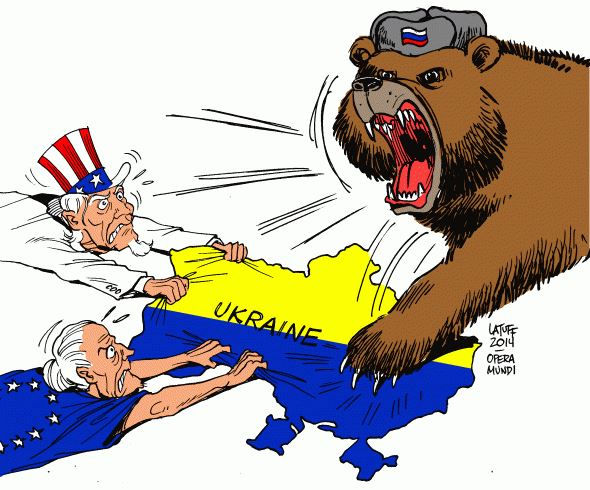
A variety of social, cultural, ethnic, and linguistic factors contributed to the sparking of unrest in eastern and southern Ukraine in 2014, and the subsequent eruption of the Russo-Ukrainian War, in the aftermath of the early 2014 Revolution of Dignity. Ukraine being a small country wedged between Russia and Europe, was part of the Soviet Union until 1991, and since then has been a less-than-perfect democracy with a very weak economy and foreign policy that wavers between pro-Russian and pro-European. The conflict in eastern Ukraine began in April 2014 with minor aggression between the Ukrainian military and Russian-backed separatist rebels who seized some towns in predominantly Russian-speaking eastern Ukraine. It has since then escalated to outright-if-undeclared war between Russia and Ukraine. Separatist rebels began emerging in eastern Ukraine shortly after Russia had invaded and annexed Crimea, where supposed Crimean separatists actually turned out to be unmarked Russian special forces. They seized towns like Sloviansk and Donetsk, in the eastern region known as Donbas, ostensibly in outrage against the protests that had toppled Ukraine's pro-Russia President Viktor Yanukovych, himself from that same eastern region.
Historical Background:
The crisis in Ukraine began with protests in the capital city of Kyiv in November 2013 against the then Ukrainian President Viktor Yanukovych’s decision to reject a deal for greater economic integration with the European Union. After a violent crackdown by state security forces unintentionally drew an even greater number of protesters (Euromaidan) and escalated the conflict, President Yanukovych fled the country in February 2014. In March 2014, Russian troops took control of Ukraine’s Crimean region, before formally annexing the peninsula after Crimean's voted to join the Russian Federation in a disputed local referendum. Russian President Vladimir Putin cited the need to protect the rights of Russian citizens and Russian speakers in Crimea and southeast Ukraine. The crisis heightened ethnic divisions, and two months later pro-Russian separatists in the Donetsk and Luhansk regions of eastern Ukraine held a referendum to declare independence from Ukraine. In July 2014, the situation in Ukraine escalated into an international crisis and put the United States and the European Union (EU) at odds with Russia when a Malaysian Airlines flight was shot down over Ukrainian airspace, killing all 298 onboard. Since February 2015, France, Germany, Russia, and Ukraine have attempted to broker a cessation in violence through the Minsk Accords. However, efforts to reach a diplomatic settlement and satisfactory resolution have been unsuccessful. In April 2016, NATO announced that the alliance would deploy four battalions to Eastern Europe, rotating troops through Estonia, Latvia, Lithuania, and Poland to deter possible future Russian aggression elsewhere in Europe, particularly in the Baltics.
Ideology behind Russian Invasion in 2022:
On 24 February 2022, the Russian Federation launched a large-scale military invasion of Ukraine, marking a major escalation to a conflict that began in 2014. Following Ukraine's Revolution of Dignity in 2014, Russia had annexed Crimea, while Russian-backed separatist forces had seized part of the Donbas in eastern Ukraine, leading to an ignition in the eight-year war in the region. From early-2021, there was a Russian military built-up around the Russo-Ukrainian border. The US and others accused Russia of planning an invasion into Ukraine, but Russian officials repeatedly denied the same as recent as 20 February 2022. During the crisis, Russian president Vladimir Putin condemned the post-1997 enlargement of NATO as a threat to his country's security, a claim which NATO rejected. He demanded Ukraine to be barred from ever joining NATO. On 21 February 2022, Russia officially recognized the Donetsk People’s Republic and Luhansk People’s Republic, two self-proclaimed states controlled by pro-Russian separatist forces in the Donbas. The following day, Russia's Federation Council unanimously authorized Putin to use military force abroad, and Russian troops were openly sent into both territories. On 24 February, Putin announced a "special military operation", which according to him was aimed at the "demilitarization" and "denazification" of Ukraine. Minutes later, missiles began to hit locations across Ukraine, including the capital, Kyiv causing massive destruction and a sense of hostility throughout the country. The State Border Guard Service of Ukraine said that its border posts with Russia and Belarus were attacked. Two hours later, Russian ground forces entered the country. Ukrainian president Volodymyr Zelenskyy responded by enacting martial law, severing all \the diplomatic ties with Russia, and ordering general mobilization across the country.
Geopolitical reaction to the 2022 Russian invasion of Ukraine

Countries that have condemned the invasion
Countries that have maintained a neutral stance
Countries that have blamed the invasion on NATO provocation
Unknown
Russia
Ukraine
Current Situation:
Since Russia has invaded Ukraine premises on 24th February 2022, more than 2000 civilian causalities have been reported by the Ukrainian Government. Excluding the Russian troops, at least 21 people from 7 countries besides Ukraine died due to the war. According to the UN High Commissioner for Refugees, more than a half-million Ukrainians fled the country in the first four days after the invasion; about 281,000 went to Poland, almost 85,000 to Hungary, at least 36,390 to Moldova, more than 32,500 to Romania, 30,000 to Slovakia, and about 34,600 to various other countries. Within the first week, a million refugees had fled from Ukraine; they were predominantly women and children, as men between the age of 18 and 60 were denied exit from Ukraine. Evacuation process has been initiated by various counties to bring their citizens back from Ukraine. As of now more then 60% of Indian citizens have been evacuated from Ukraine. On 3 March 2022, EU ministers agreed to invoke the Temporary Protection Directive for the first time in history, so that refugees from Ukraine can stay in the EU for at least one year without applying for asylum.
Countries including Poland, Germany, and Switzerland, have waived passport requirements for Ukrainians fleeing the war zone. The invasion of Ukraine was considered to have violated the Charter of the United Nations and constituted a crime of aggression according to international criminal law, raising the possibility that the crime of aggression could be prosecuted under universal jurisdiction. In Ukraine, the National Bank suspended currency markets, announcing that it would fix the official exchange rate. The central bank also limited cash withdrawals to 100,000 hryvnia per day and prohibited withdrawal in foreign currencies by members of the general public. The PFTS Stock Exchange stated on 24 February that trading was suspended due to the emergency events.
Conclusion:
The current tension between Russia and Ukraine has caused immense hostility, destruction and damage to both the counties, mostly impacting Ukraine. It reflects the violation of human rights, laws and peace that is to be maintained and held upon for a proper functioning of the society. Arriving at the situation of invasion and war not just symbolizes the weakness of diplomatic relations between the nations but also raise questions on peace enforcing bodies and the function throughout the time. Oppressing a nation or causing the situation of war can never be a fruitful solution for any sort of geographical, diplomatic, legal or social problem. It not only causes loses to the assets of the countries but the major loss is of the citizens of the country who by no means get caught, injure or die in the wrath of war. Prevention and total restrain of such wars is necessary to lead a prosperous society.


Comments